VibeWay :
Shoes for the Blind
#Product Design #Engineering #Wearables
Role
Product Design | Prototyping | UX Design
Team
3 Berkeley MDes Graduate Students
(Mia Wu, Shryas Bhurat)
Timeline
2 Weeks (November 2024 ~ December 2024)
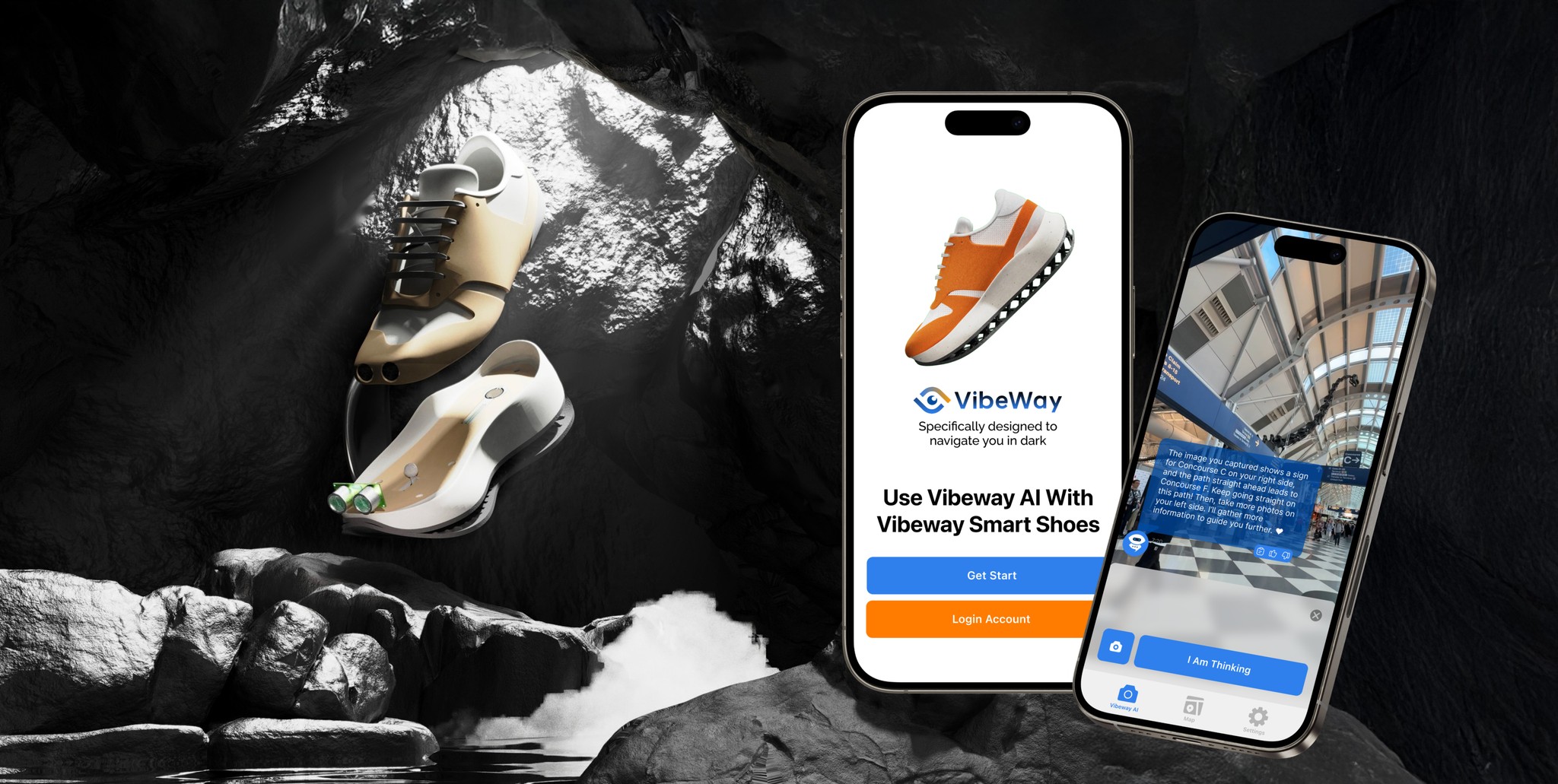
As a project during the "Technical Design Foundations" course at Berkeley MDes, our team built a product for disability & inclusivity. VibeWay is designed to aid the visually impaired to reach their desired destination through a combination of physical and digital products.
Process
UI Mockup
API Interaction
Research
Ideation & Sketch
Digital Prototyping
Form Ideation
Product Sketch
Ergonomics
Electrical Planning
User Interviews
Insights & Findings
Tests & Iterations
User Feedback
Feedback
Evaluation
Physical Prototyping
3D Modeling & Rendering
Measurements
3D Printing
Fabrication
Programming & Engineering
Highlight
Demo Video
Background
Background
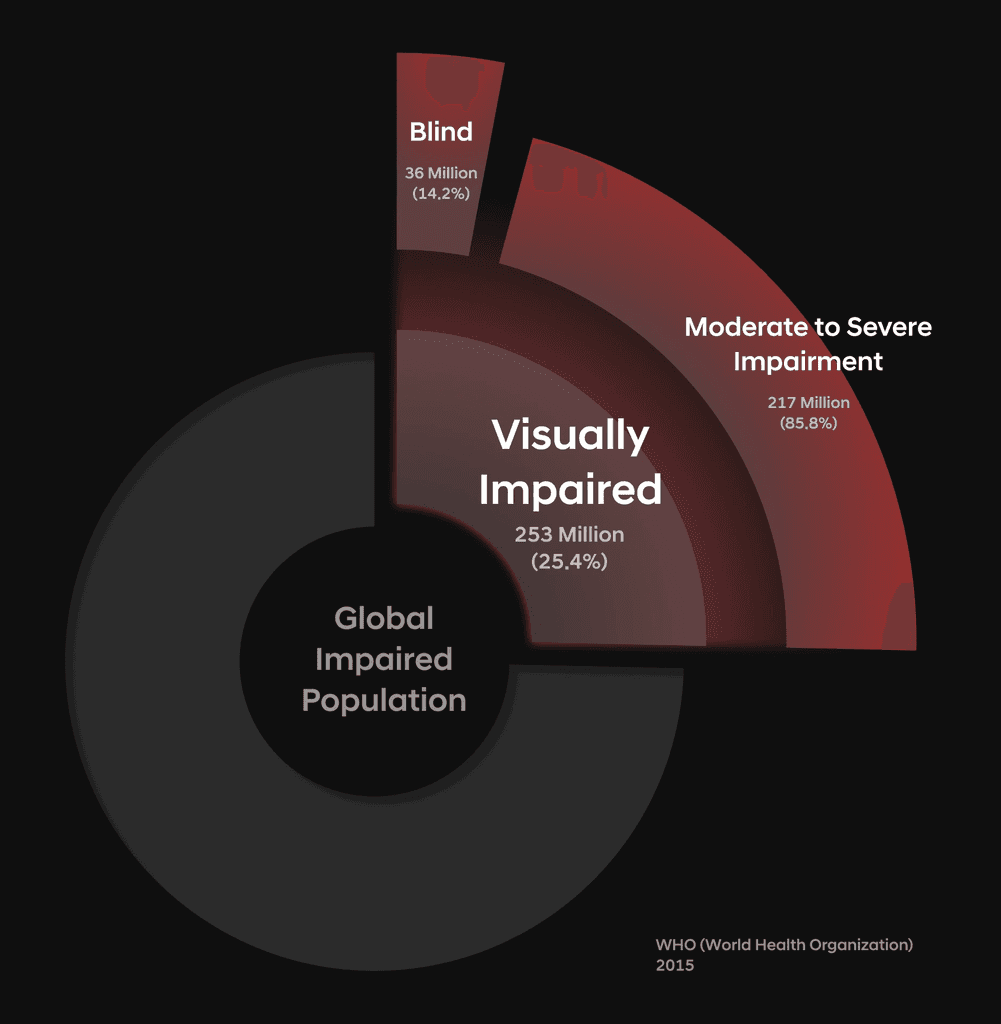
Blindness is the most prevalent disability globally, with about 253 million worldwide living with moderate to severe vision impairment and approximately 36 million people blind.
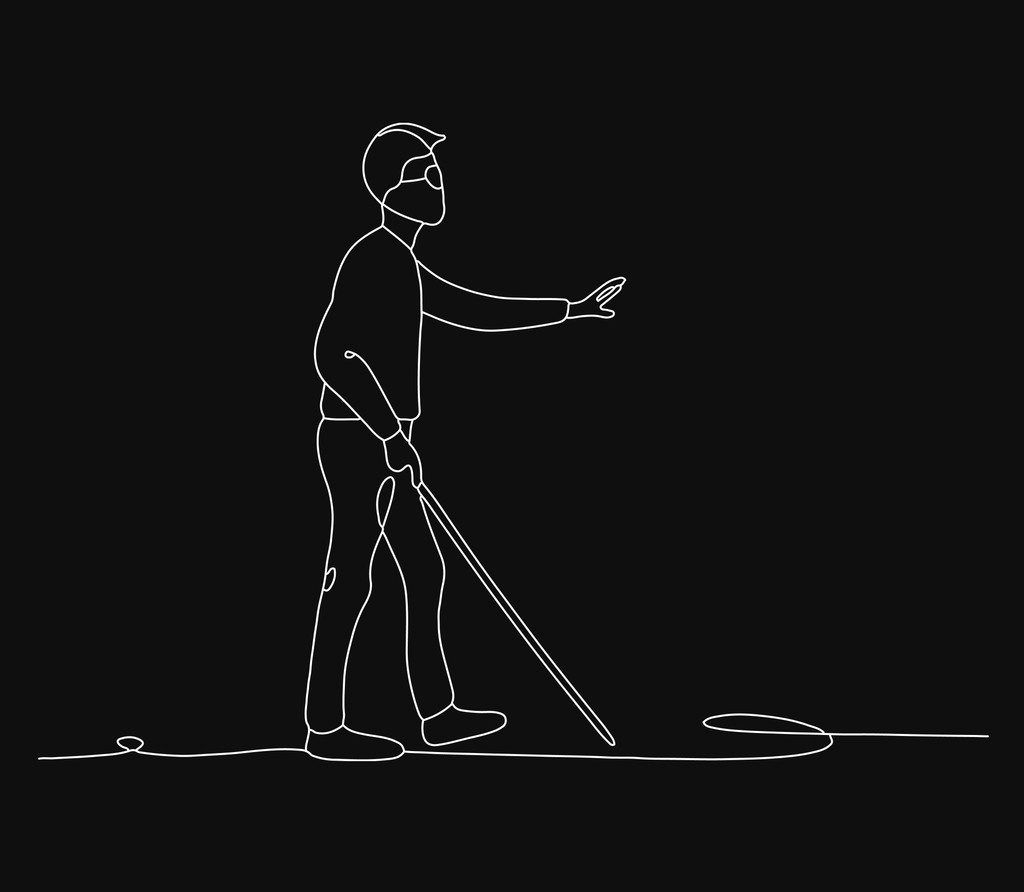
Blindness affects mobility and independence. Traditional mobility aids such as canes offer limited assistance and do not provide real-time navigation guidance.
Consequently, visually impaired individuals often rely on memorization of routes or assistance from sighted companions, constraining their autonomy and spontaneity.
Statement
How might we aid the navigation guidance experience for the visually impaired?
Research
Research
Understanding the Visually Impaired


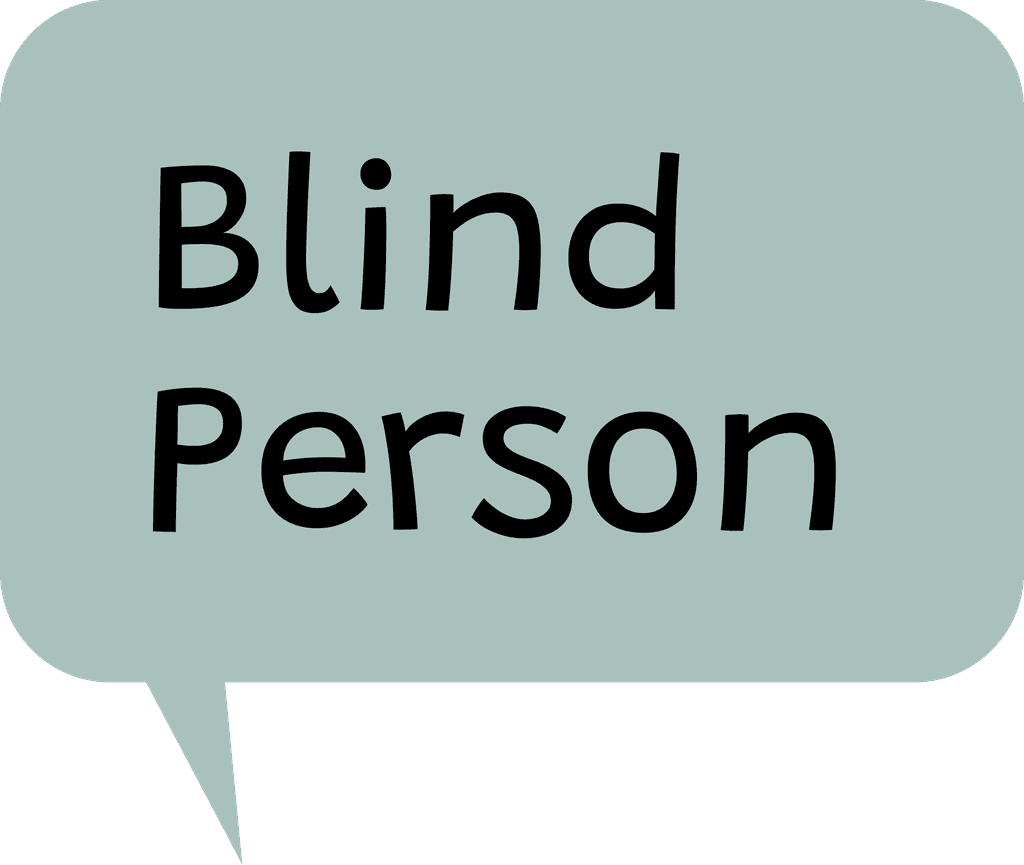

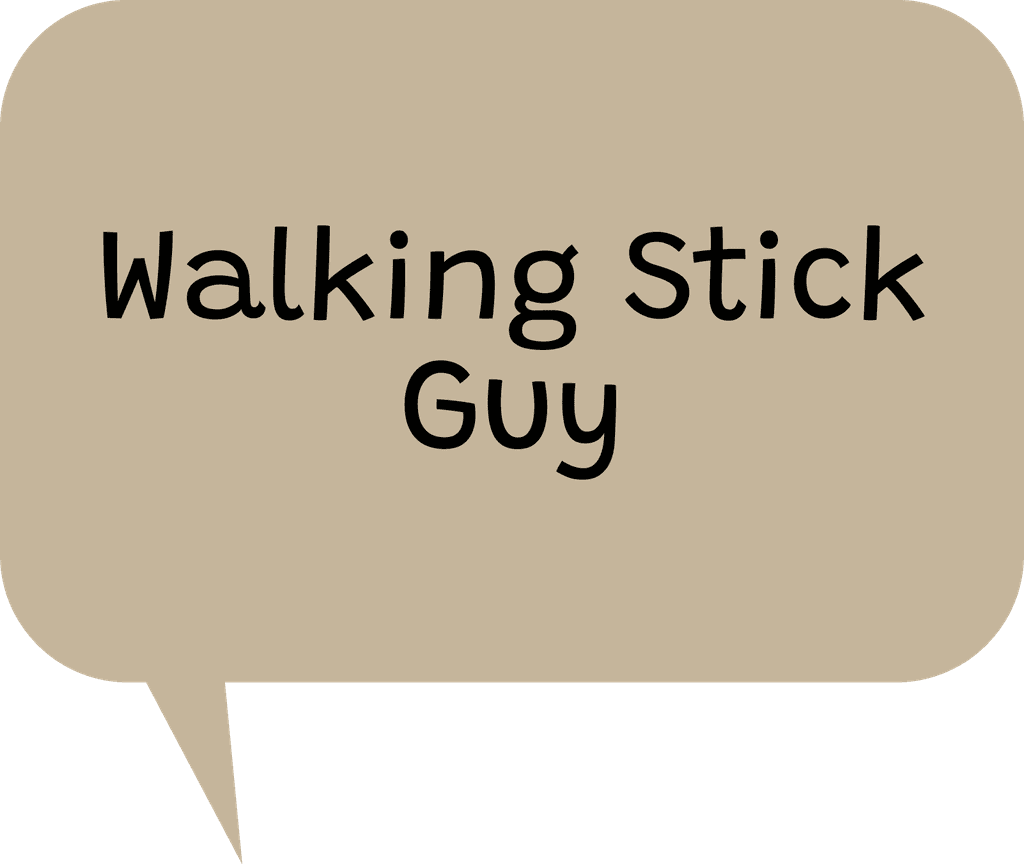

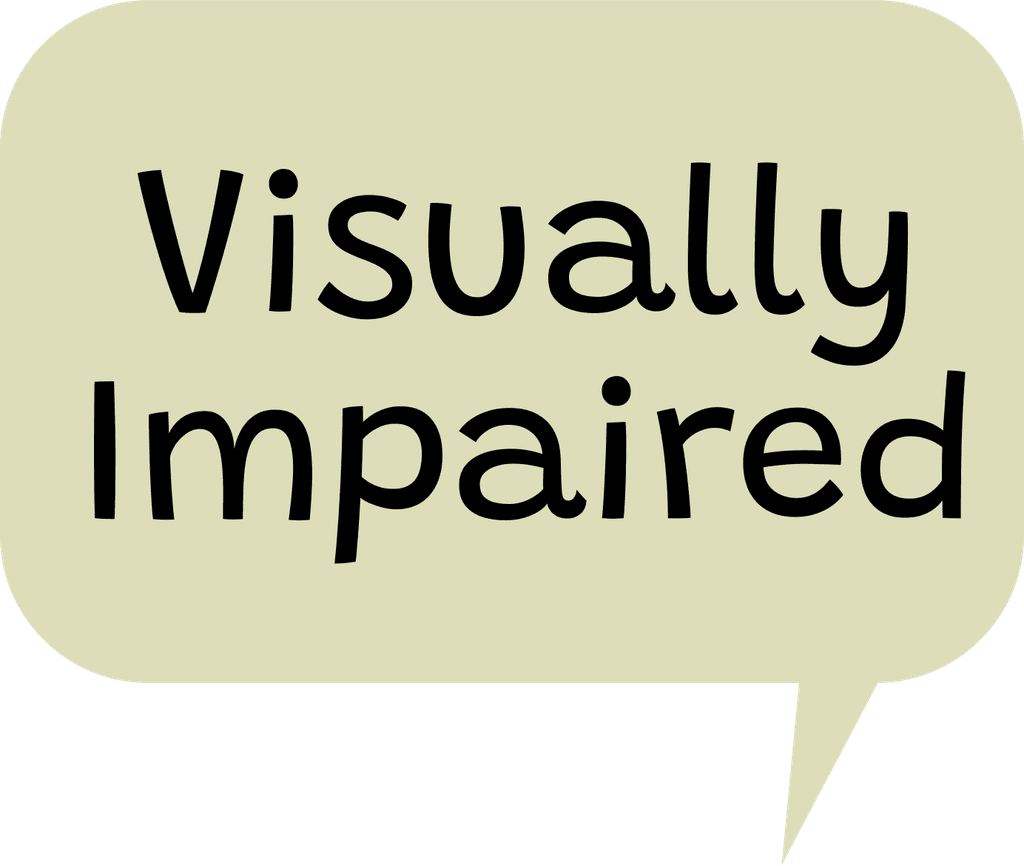
Visually Impaired individuals suffer from segregation from society due to their conditions.
Both sympathetic or offensive gestures make them feel alienated.
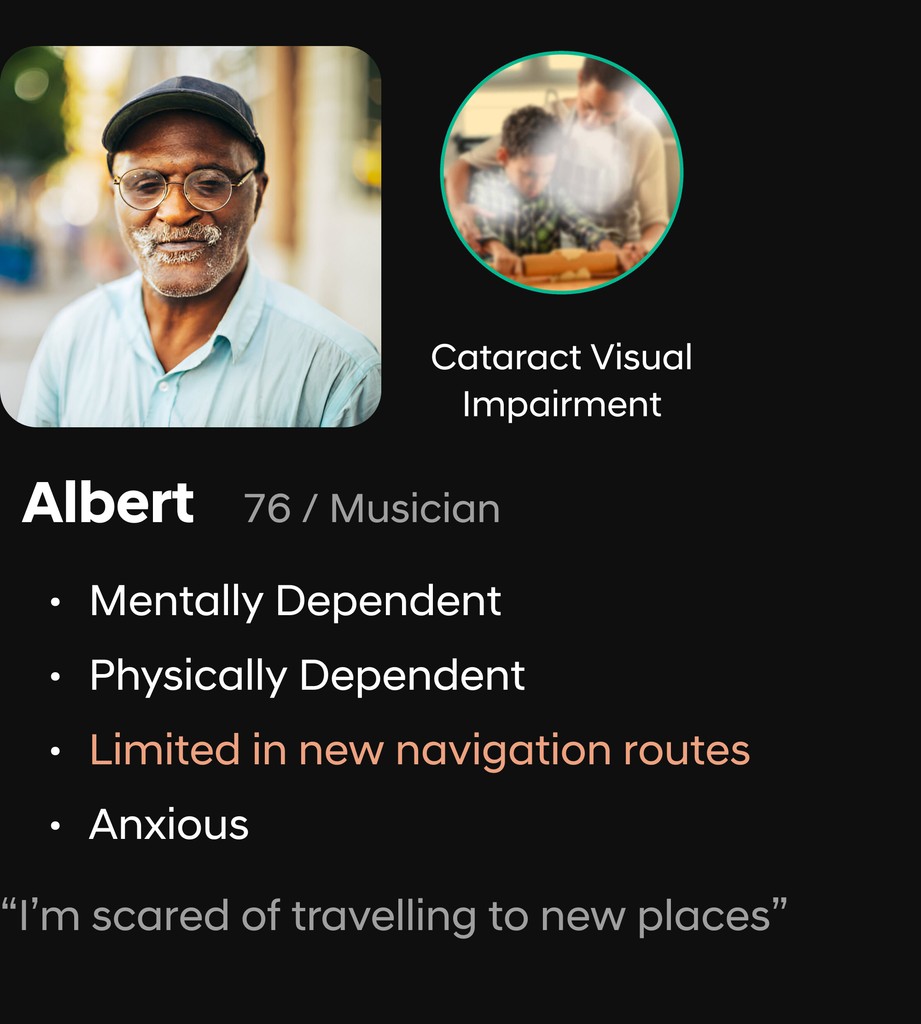
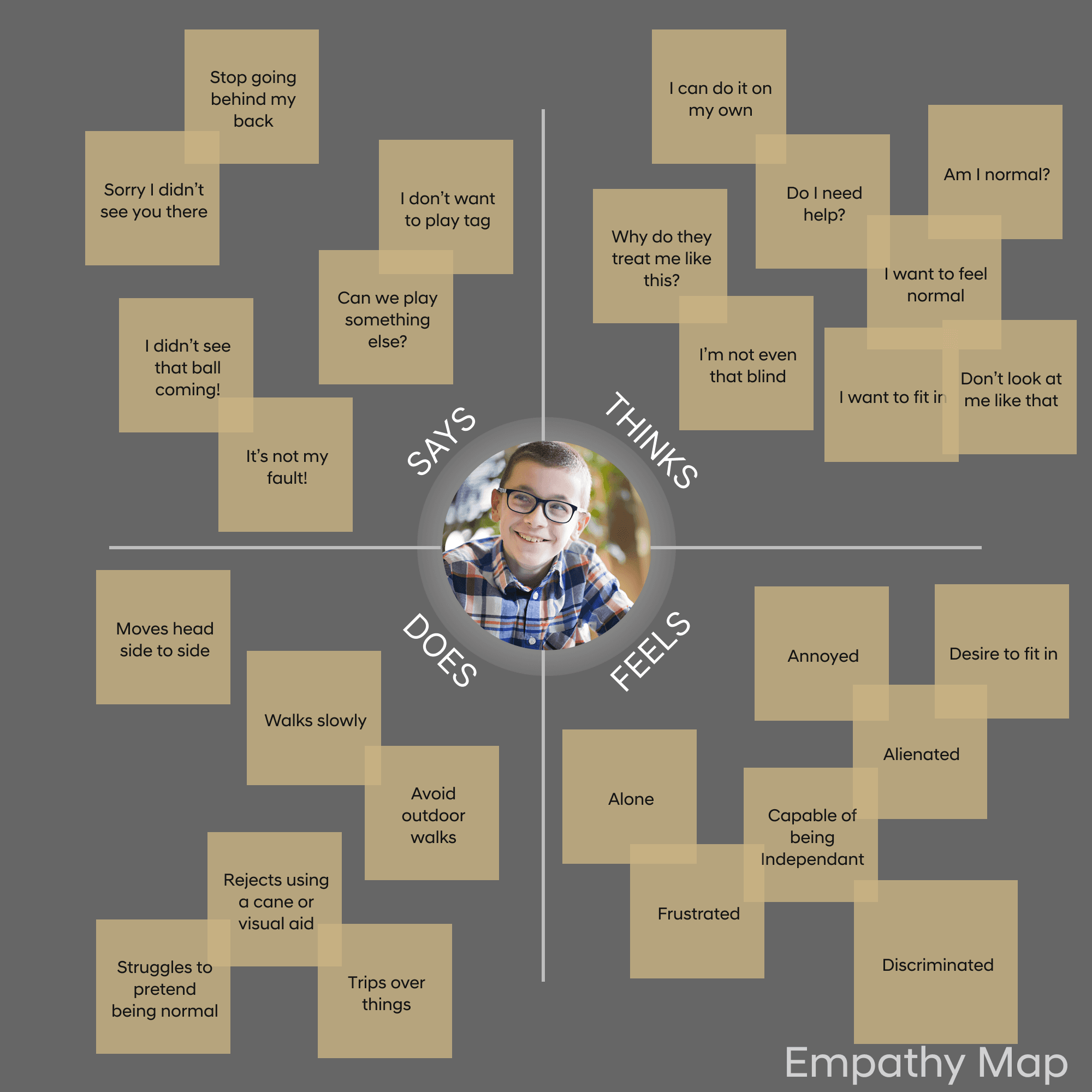
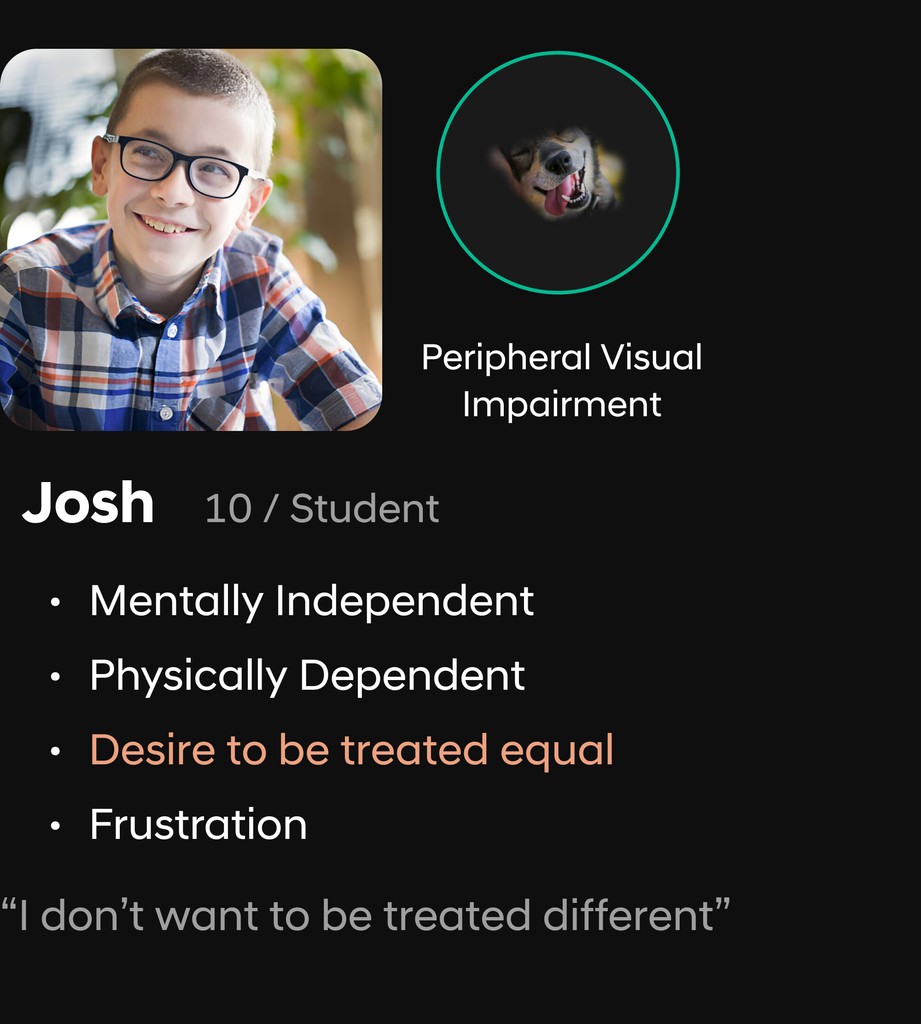
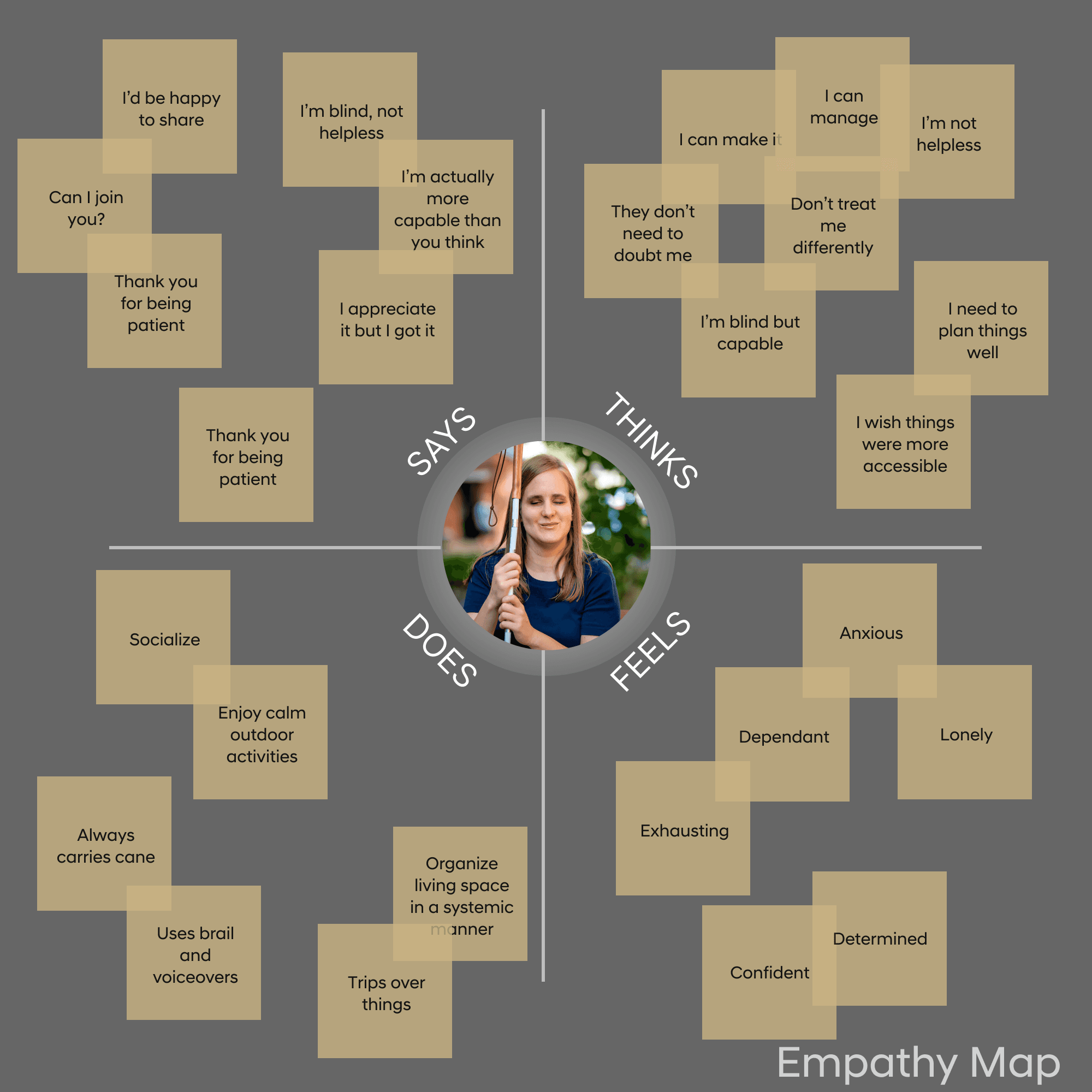
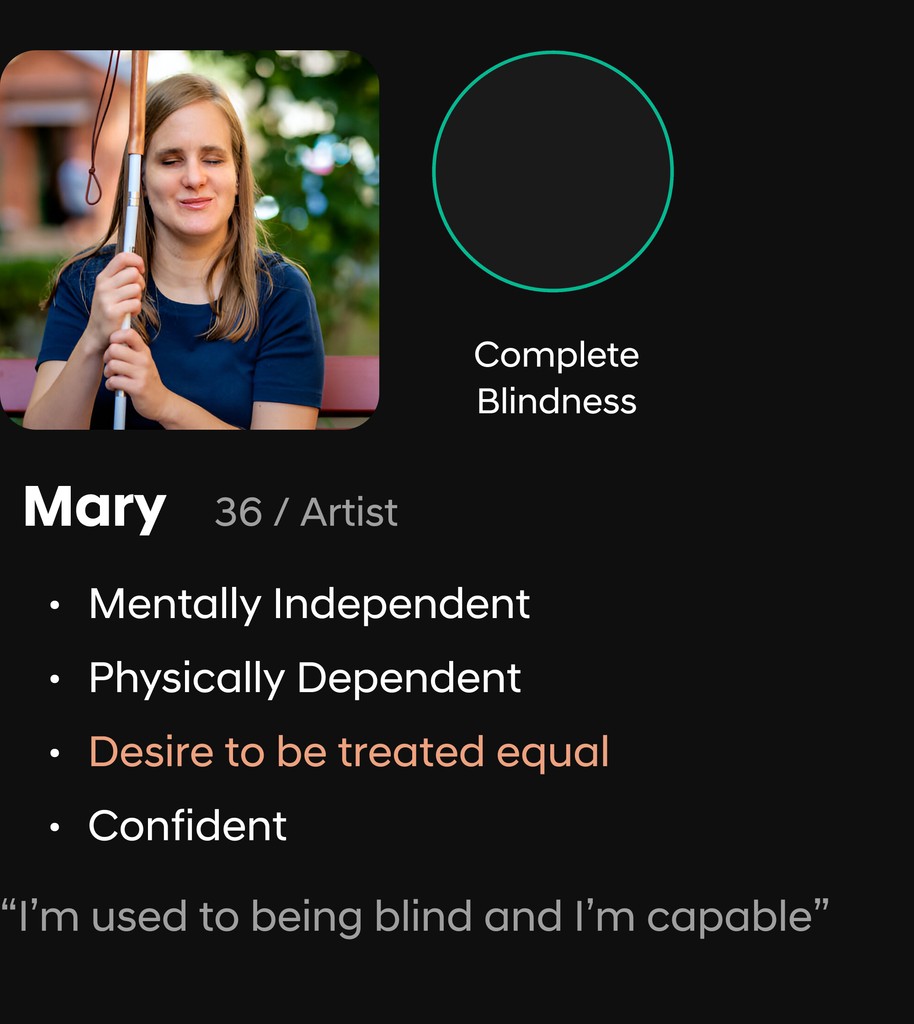
Persona Study
Depending on the severity and type of visual impairment, individuals show different traits towards their disability.
To better understand their perspective, we grouped the visually impaired into 3 categories based on their impairment type.
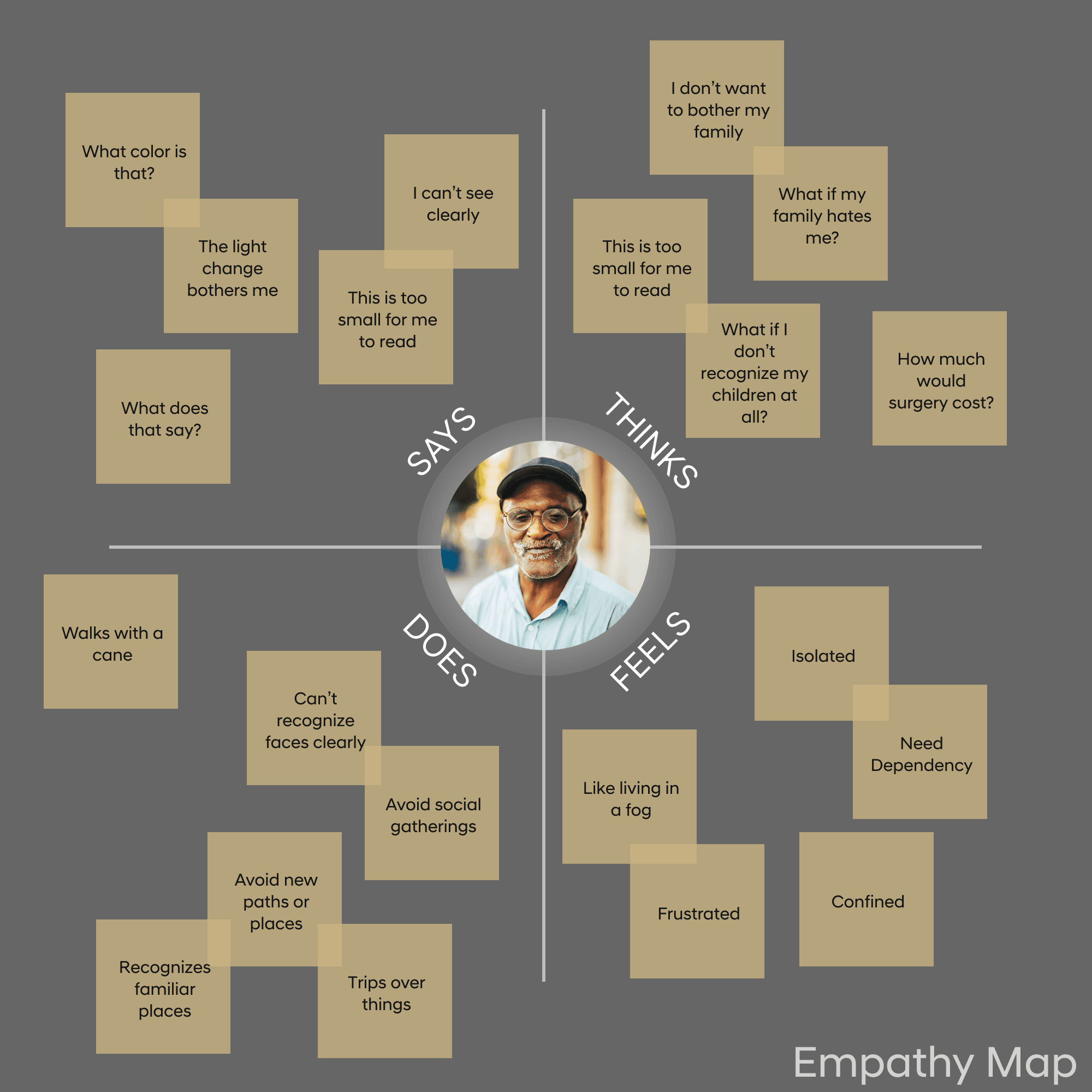
User Needs
We were able to conclude that the main pain points of the visually impaired individuals were in 2 parts.
The constraints of navigating themselves to unfamiliar destinations, and the desire to be treated equally and blend in with others.
Aid Navigation for
new & unfamiliar routes
Blend seamlessly among society
Ideation & Sketch
Ideation
Product Idea
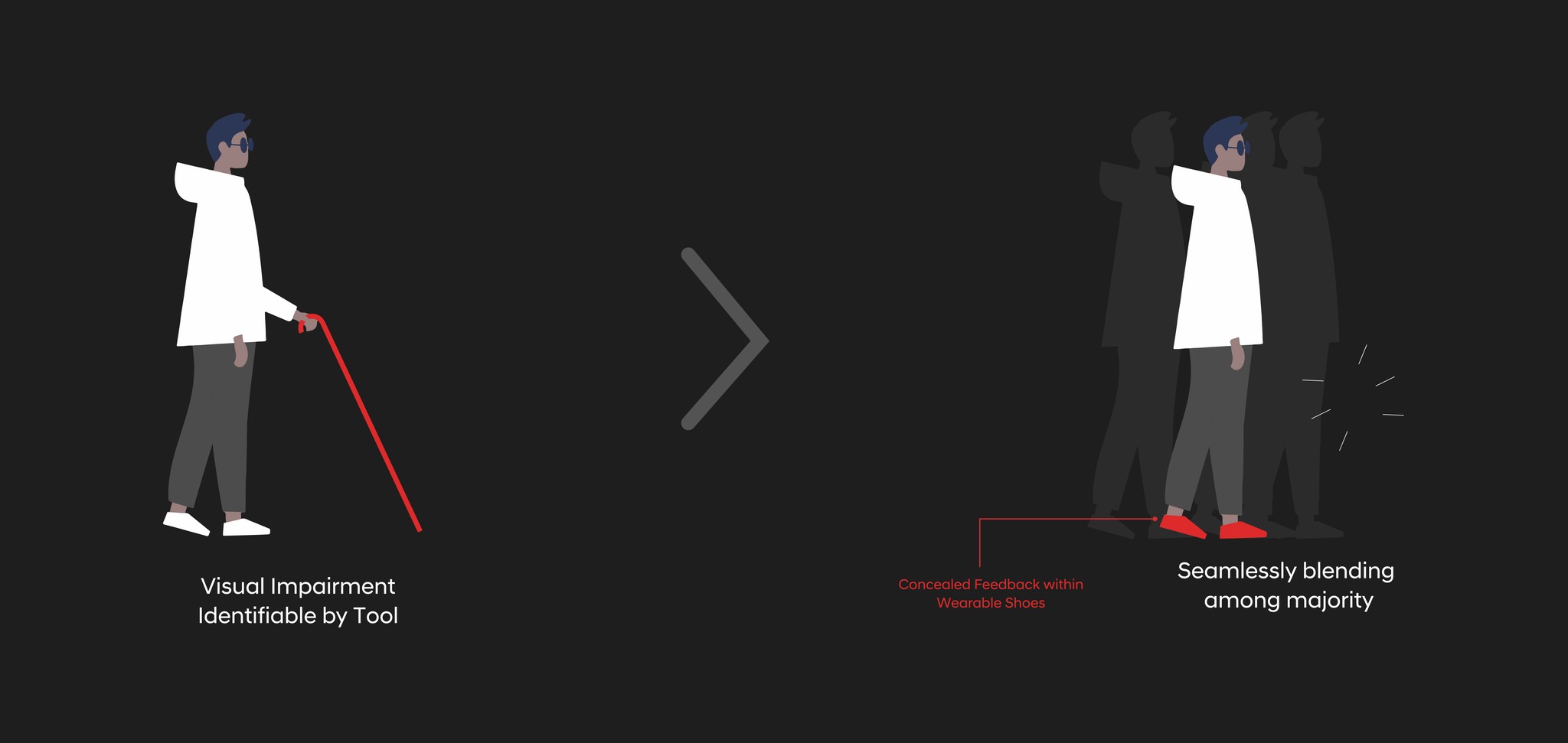
Building upon the notion that the visually impaired wish to be seen like everyone else without handicaps, we thought of transferring their navigating aid into their shoes, where the navigating feedbacks are hidden and applied to their feet.
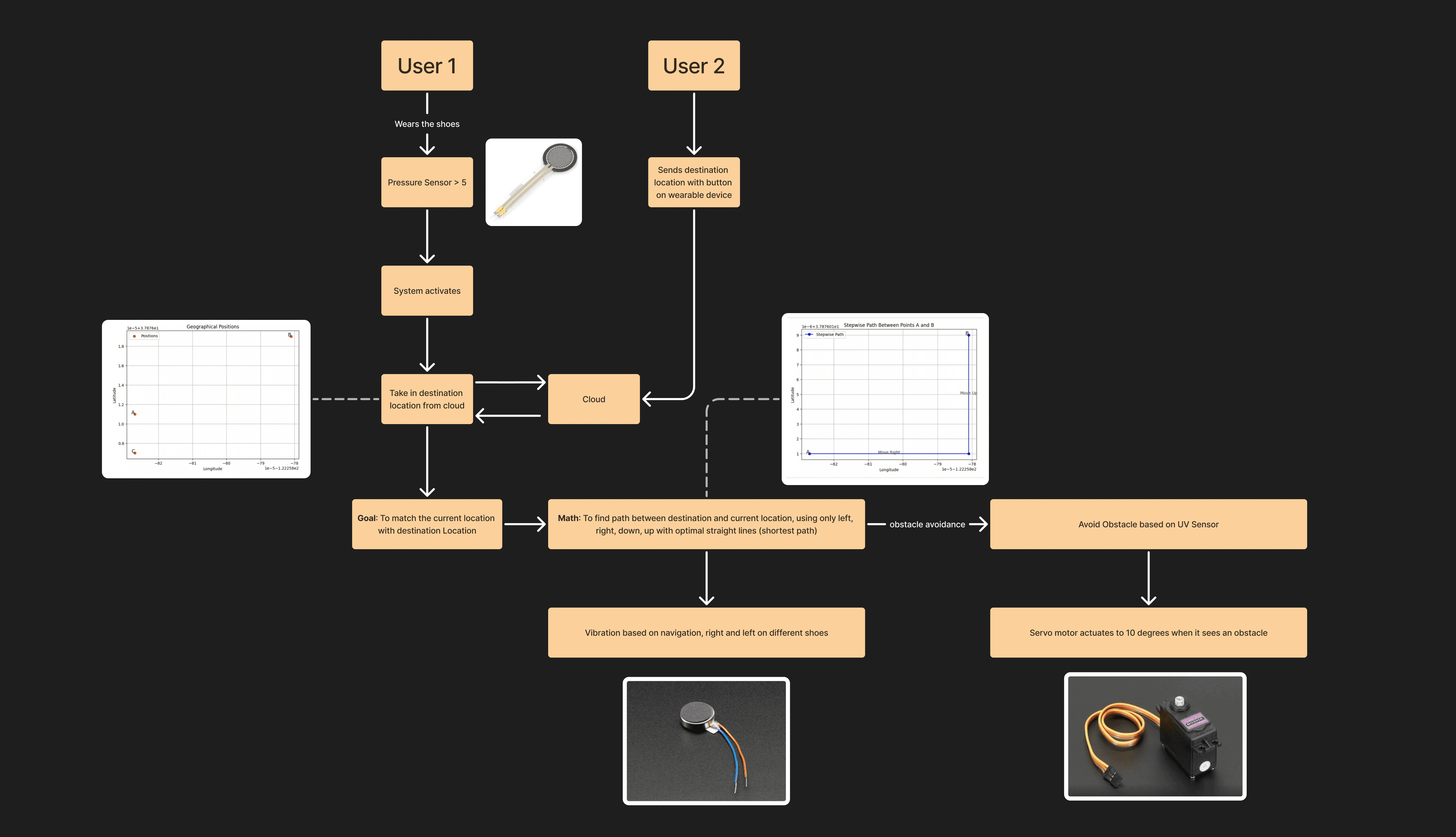
System Flow
The overall system involves 2 users. One user (the visually impaired) navigates themselves to the location of the other user using cloud data analysis for routes, and feedback from Vibration Motors for directions, and Servo Motors for obstacles.
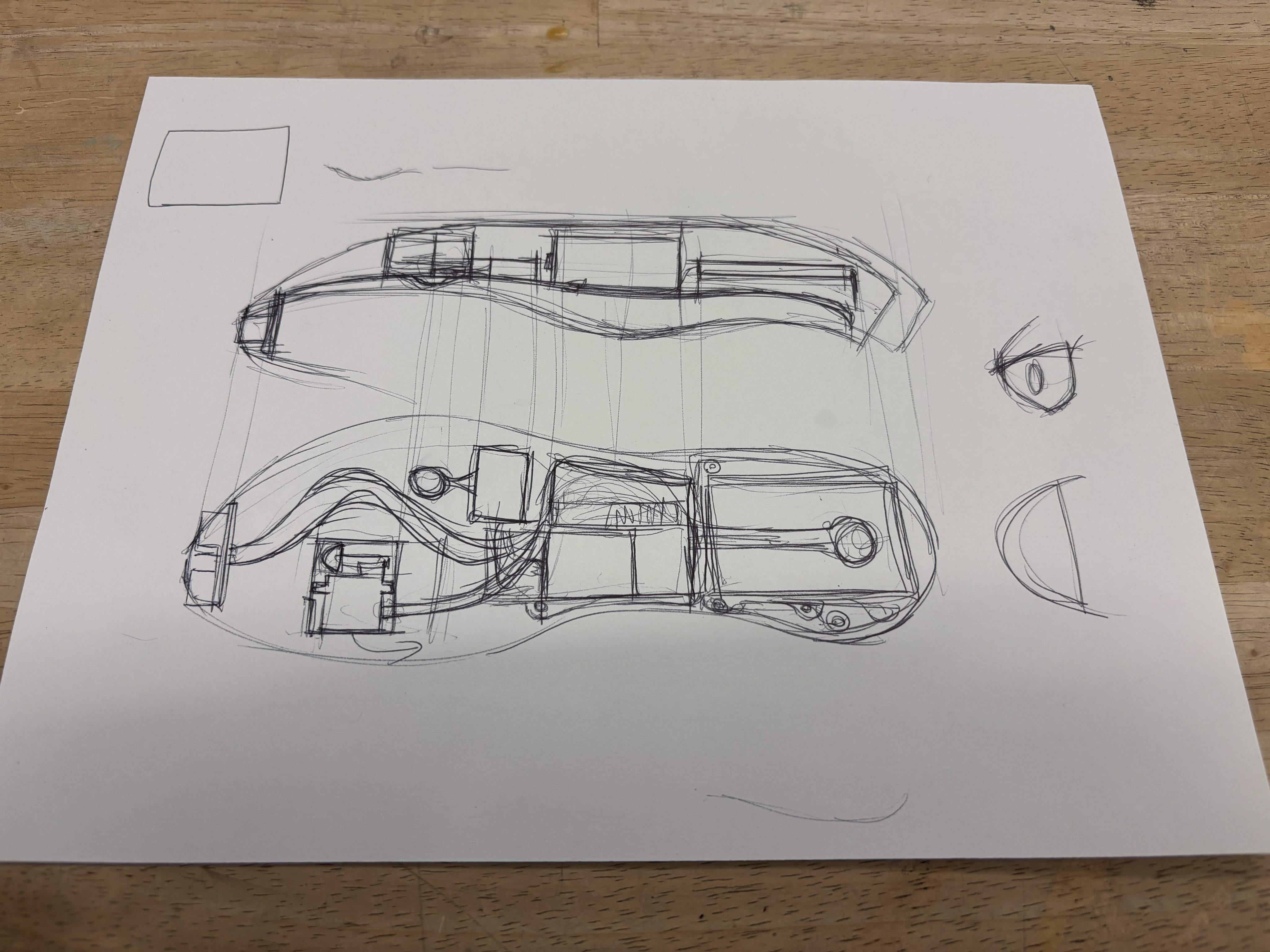
Sketching & Planning
To make sure all electronics fit into the shoe soles while minimizing the sole's thickness, we sketched several plans to figure out how to place all components inside in the most efficient and effective manner.
Iterative Physical Prototyping
Physical Prototyping
Prototyping Process
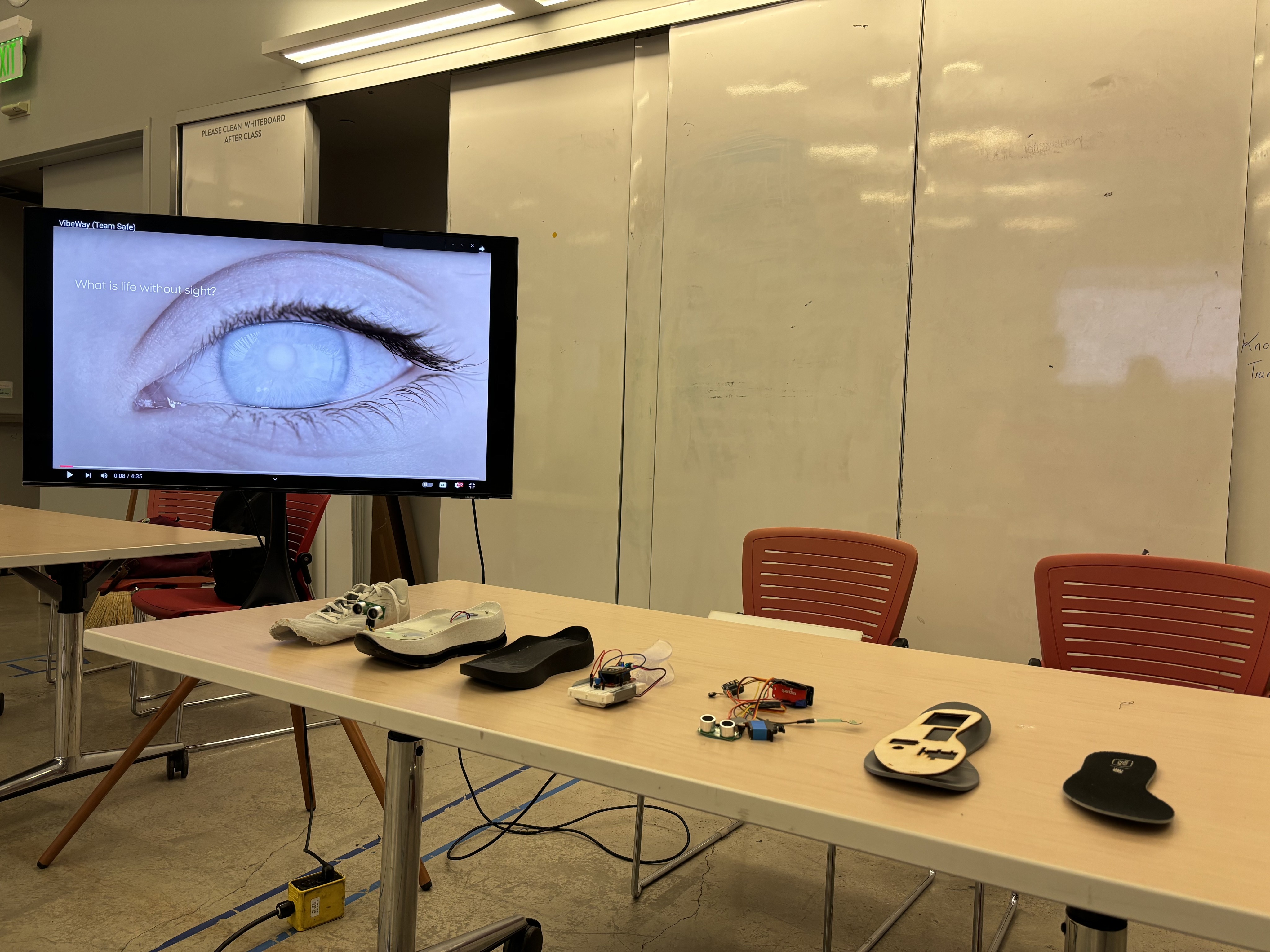
We followed the process below for iterations of the wearable shoes.
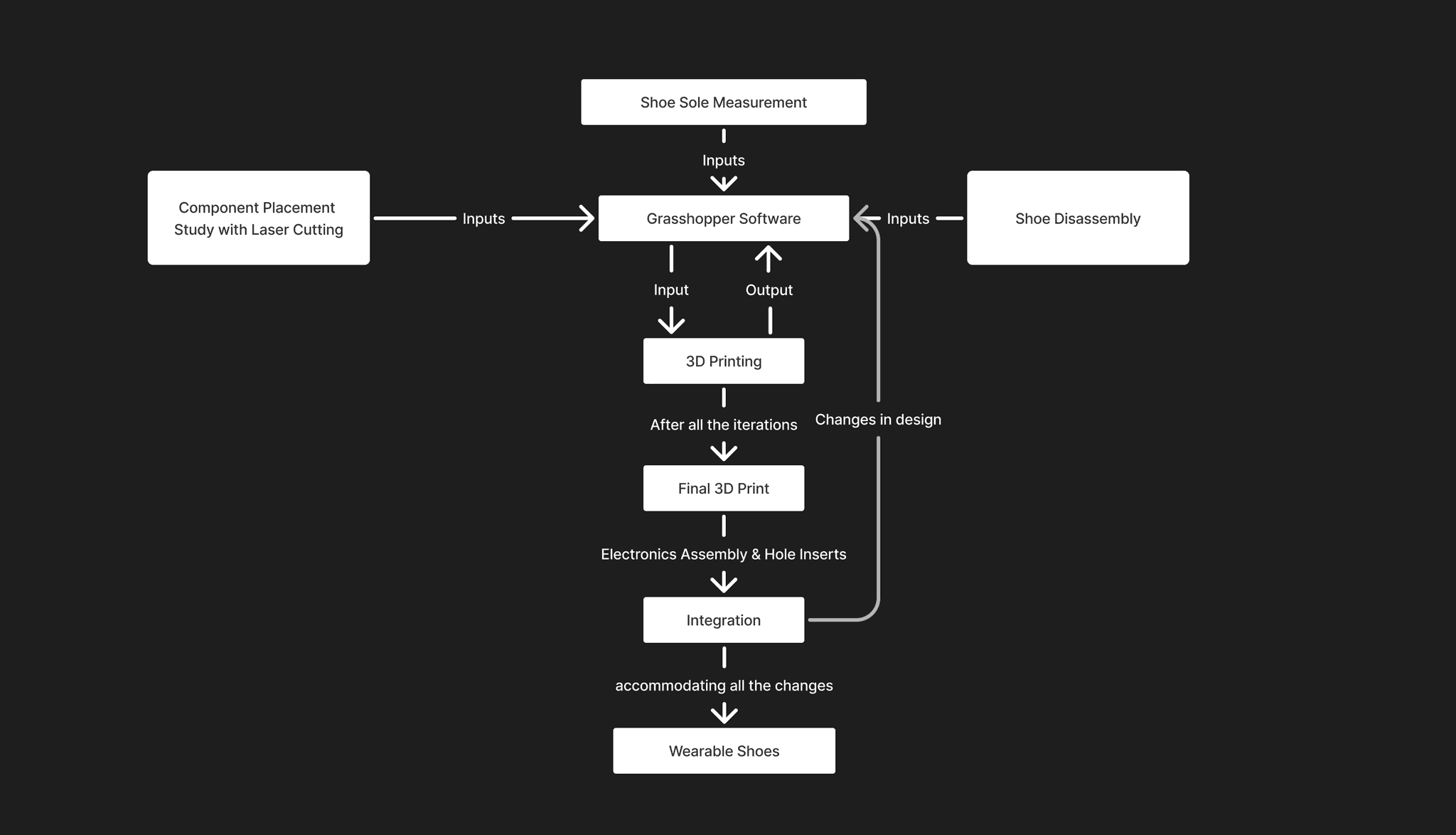
Bottomsole Fabrication
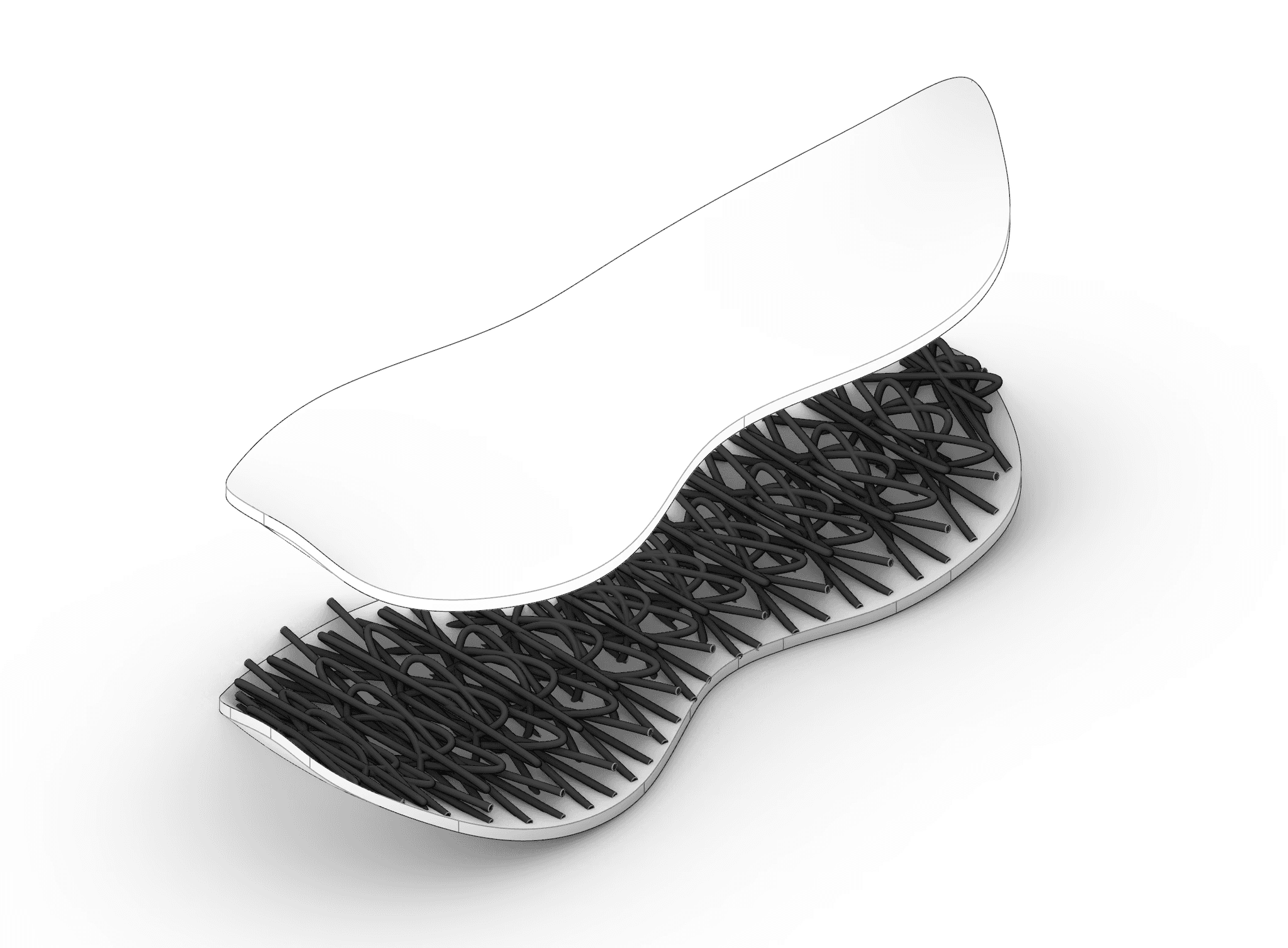
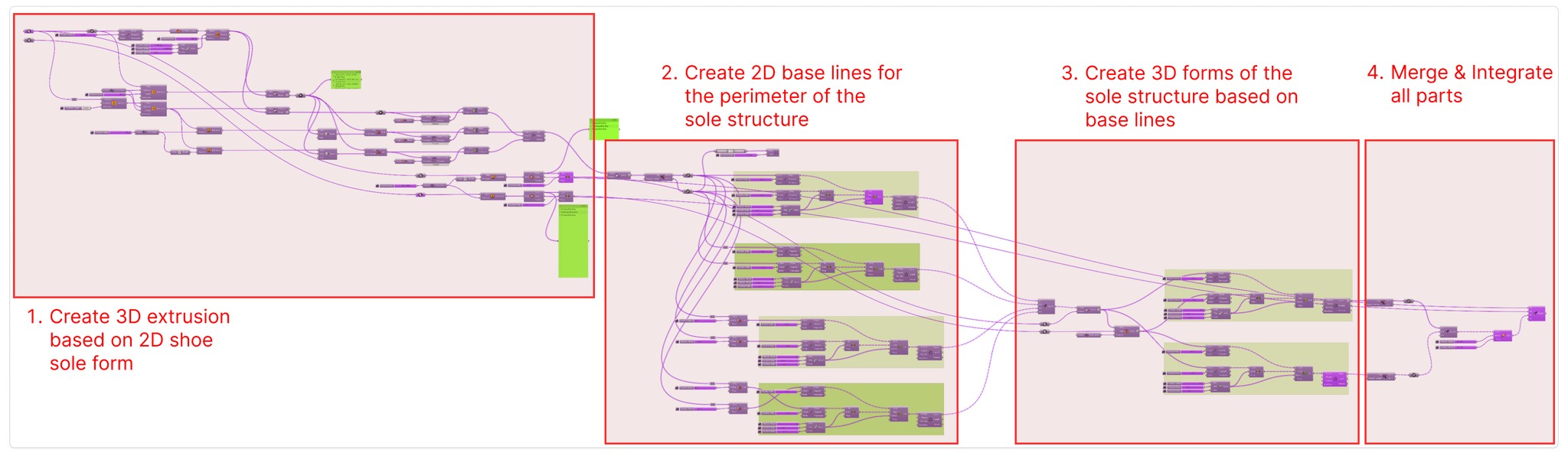
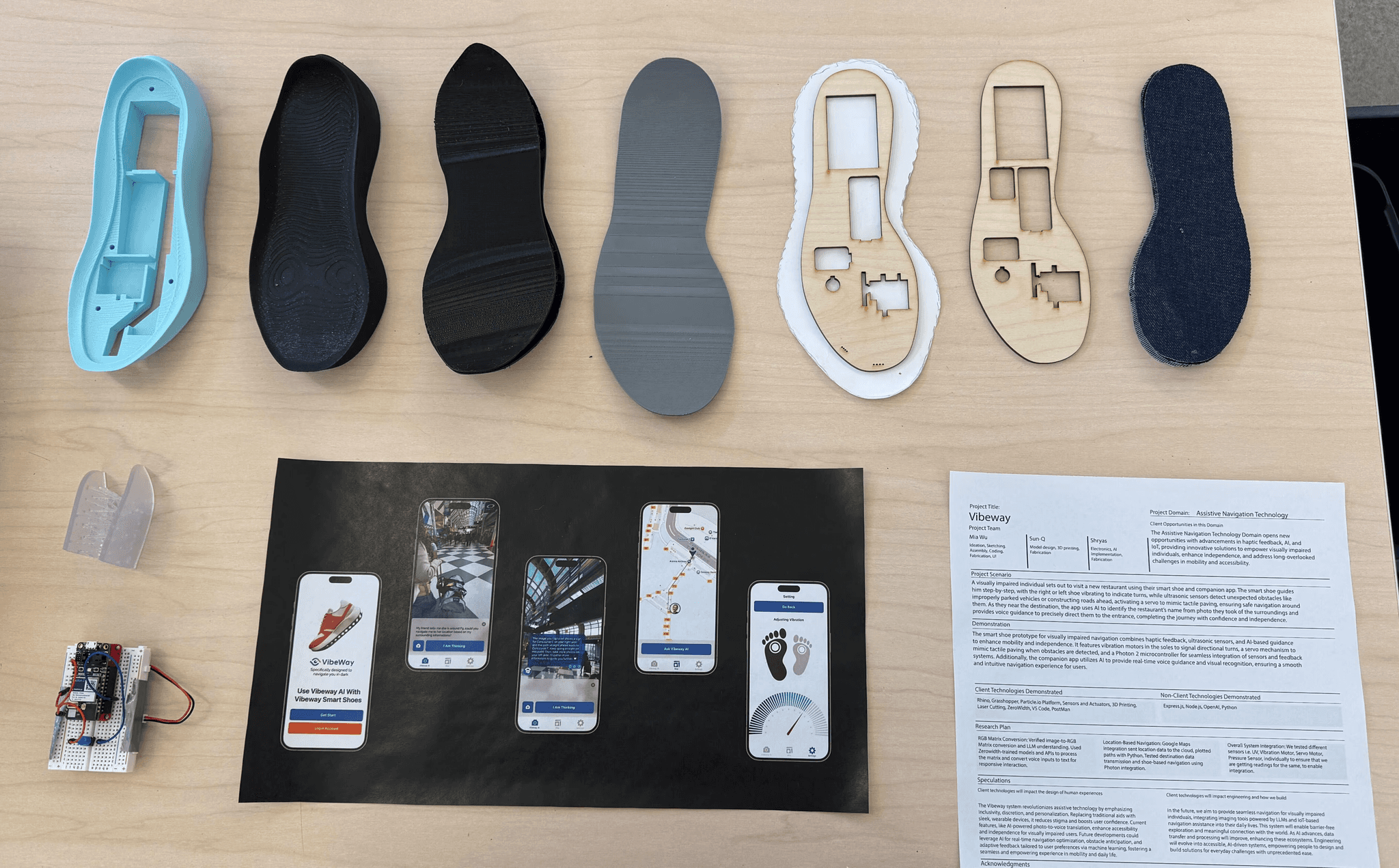
To make sure the shoes remain comfortable for the user, I 3D-modeled an elastic structure for the bottom sole to absorb the pressure and weight of the user using Rhinoceros & Grasshopper.
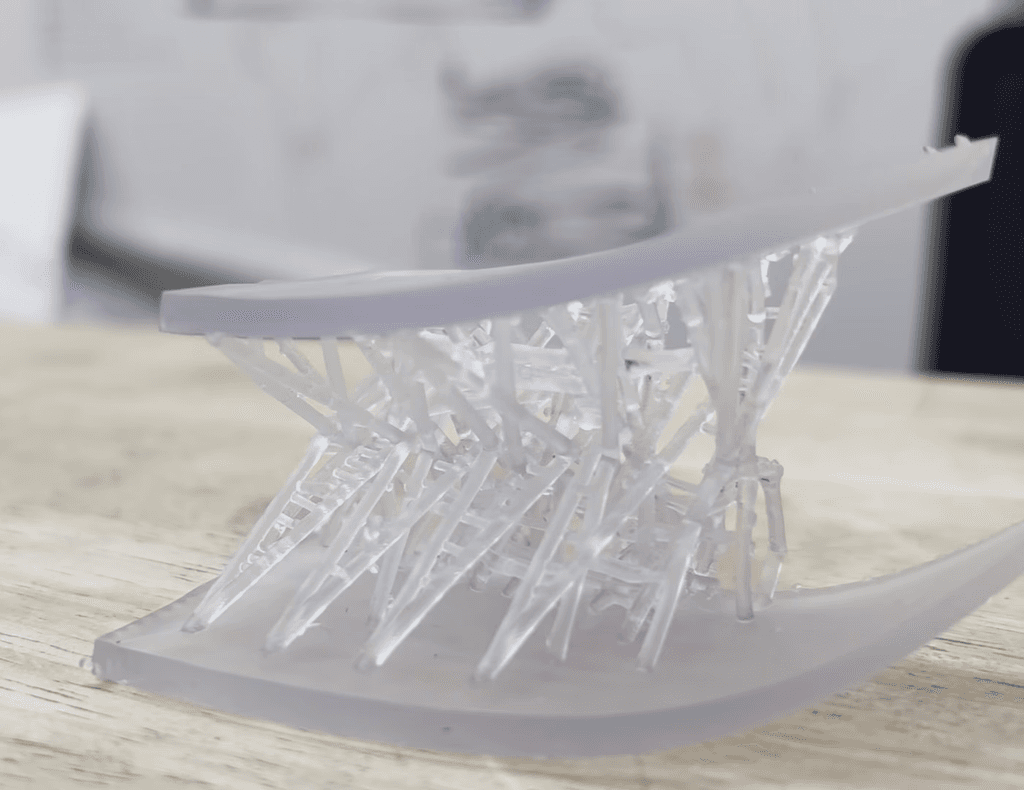
I also iterated the form by fabricating an I-Section model of the structure using Elastic PLA to test out the flexibility & durability of the bottom sole structure.
Midsole Fabrication
Multiple iterations of the Midsole form were 3d modeled within rhino to match the curvy aesthetics of sneakers as well as matching the Bottom Sole form for easier attachments. The size and shape had to be exact to match the sketched plan.
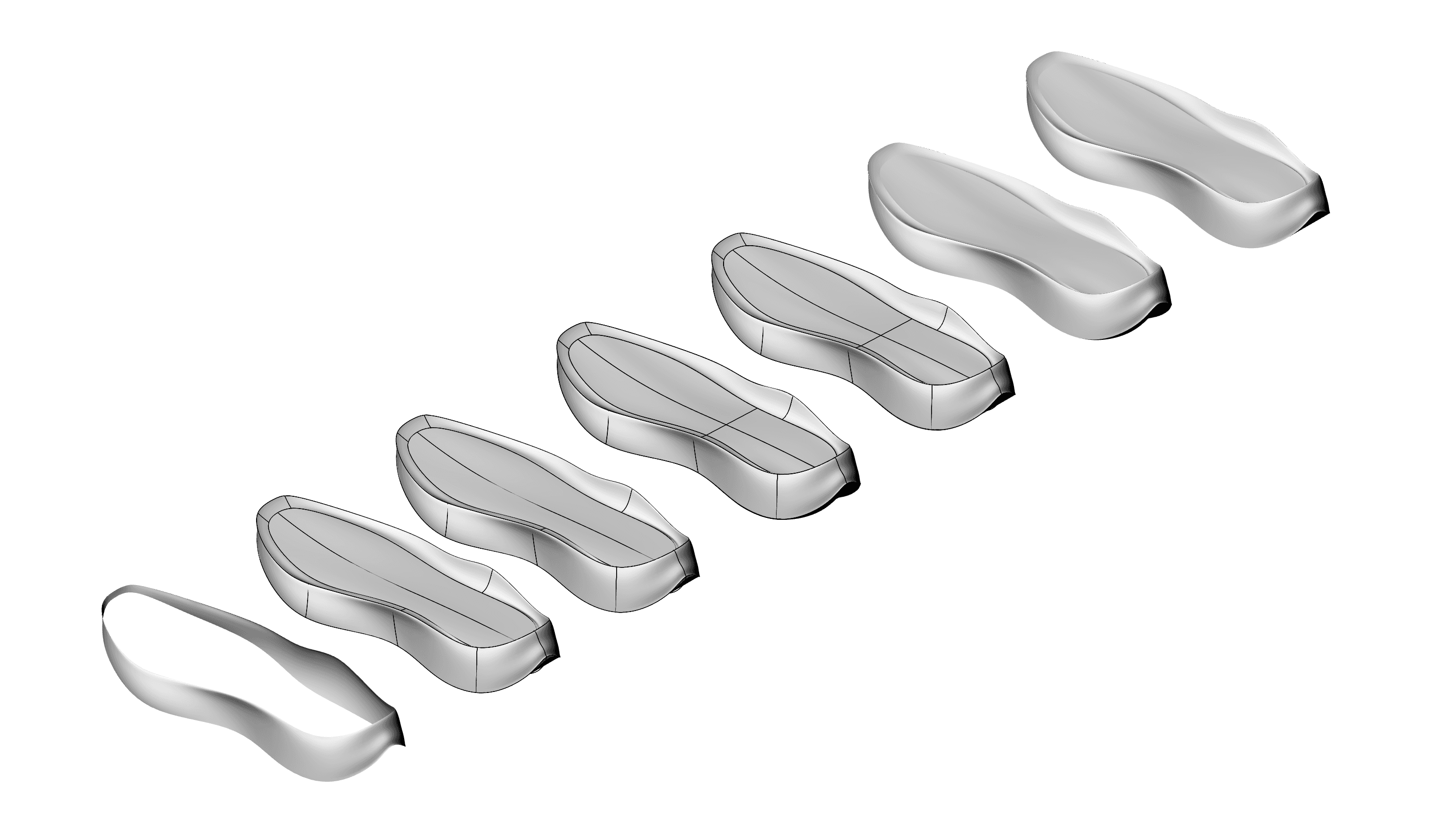
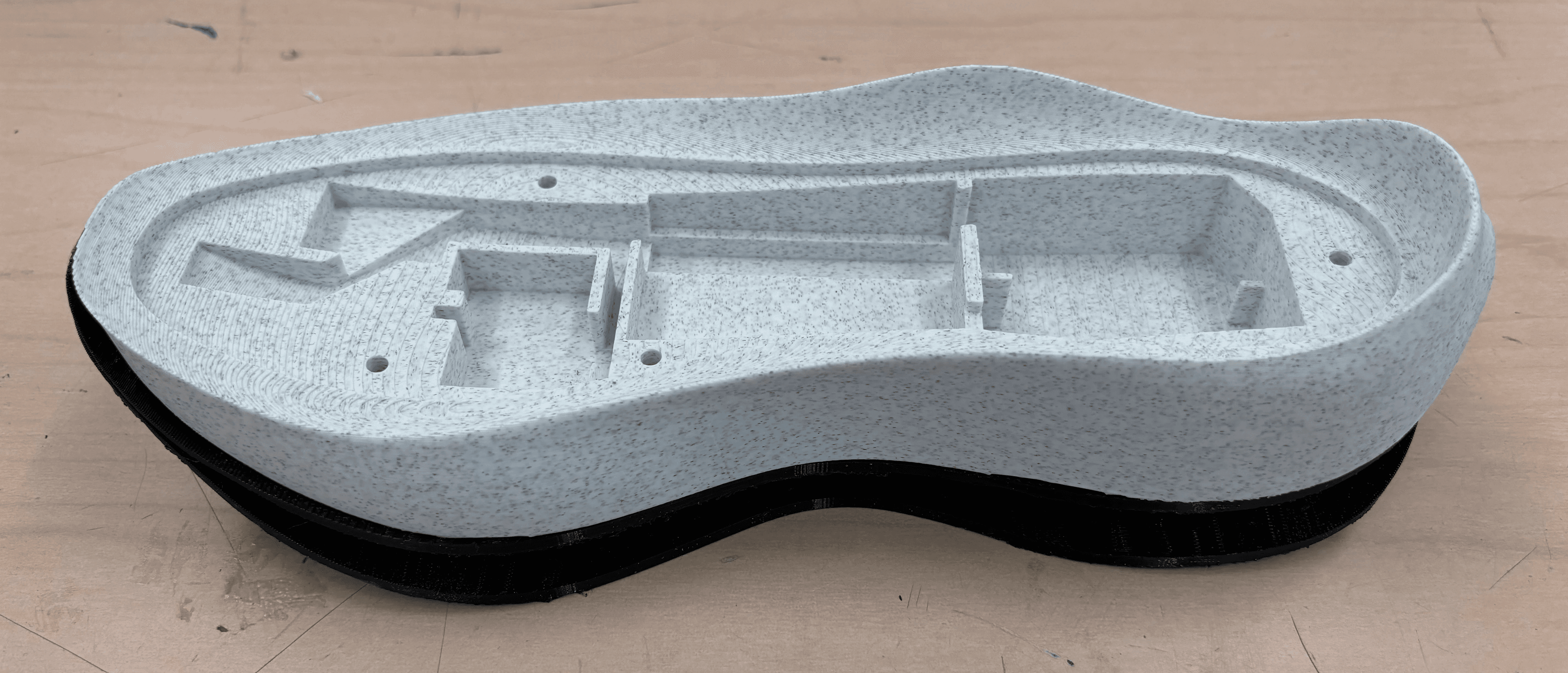
After 3D Modeling prototypes, our team 3d-printed and refined the model to fit in all electronics within.
Engineering & Programming
Using Particle Photon 2, Ultra Sonic Sensors, and Vibration Motors, we were able to send location coordinates with a button and have the system derive the most efficient path for the users with the vibration motors to reach the location.
Product Electronics System Integration
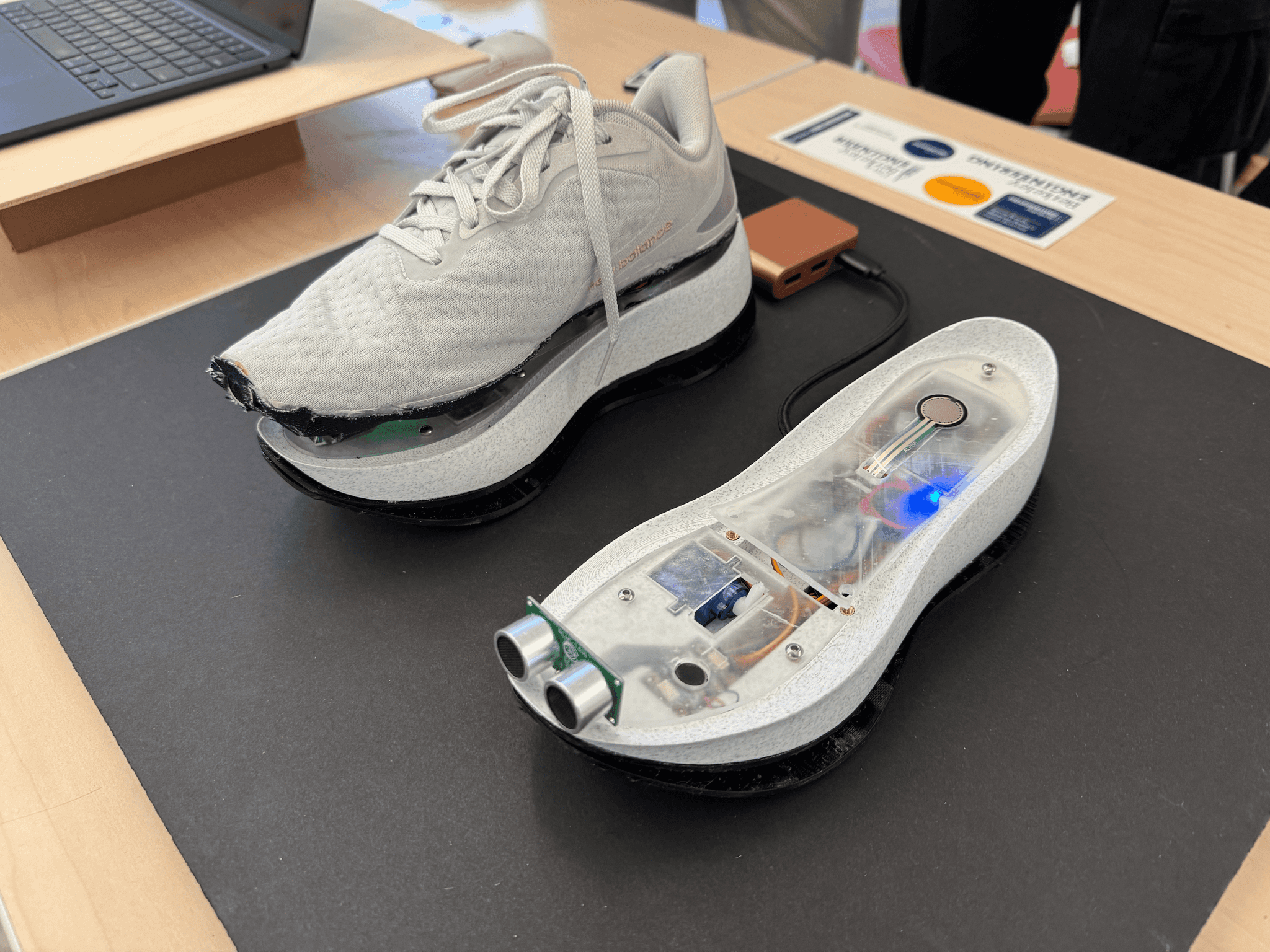
Based on the ideation sketched above, all electronic hardware (Particle Photon 2, Battery, Servo Motor, Ultrasonic Sensor etc) are fit into the outer sole of the shoe.
Assembly
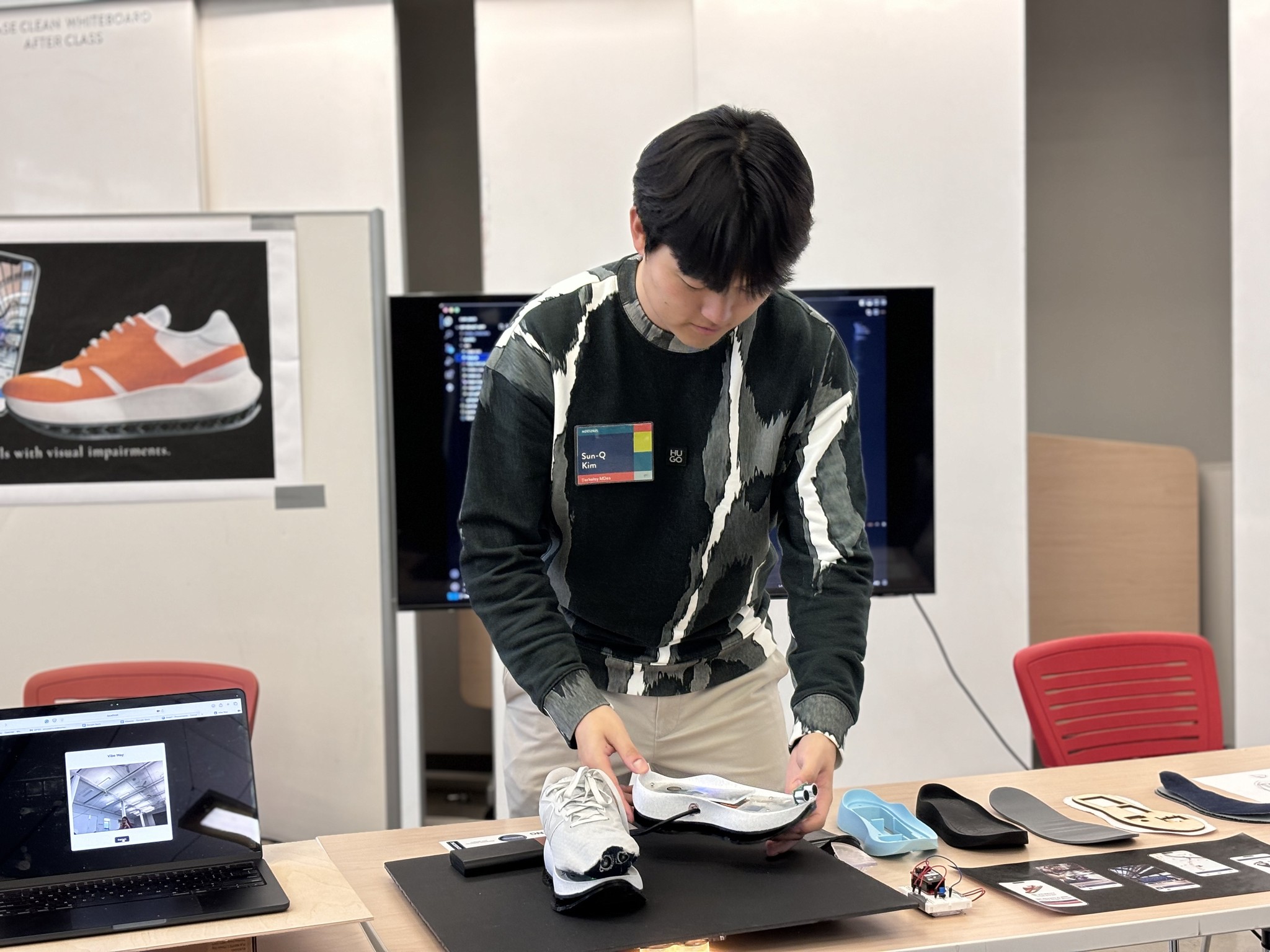
After ensuring everything worked, all the electronics within the middle sole and attaching it with the bottom sole structure and the upper body of the shoe.
Iterative Interface Prototyping
Interface Prototyping
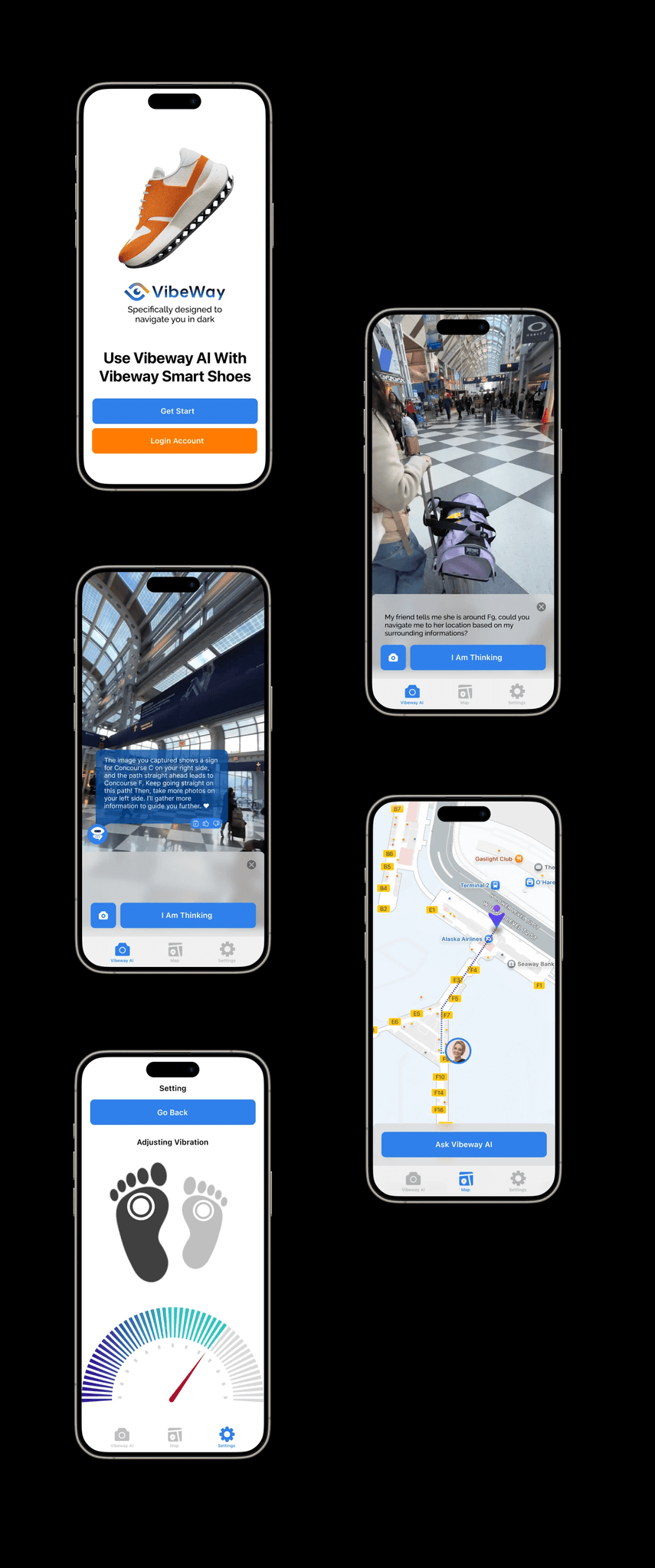
UI for Navigation Setup
To accompany the physical shoe product, we prototyped a digital app system that would pair the shoes to the user and navigate the user towards the destination via audio. It also describes what is in front of the user for situational awareness.
Takeaways
Presentation & Reflections
Presentation & Showcase
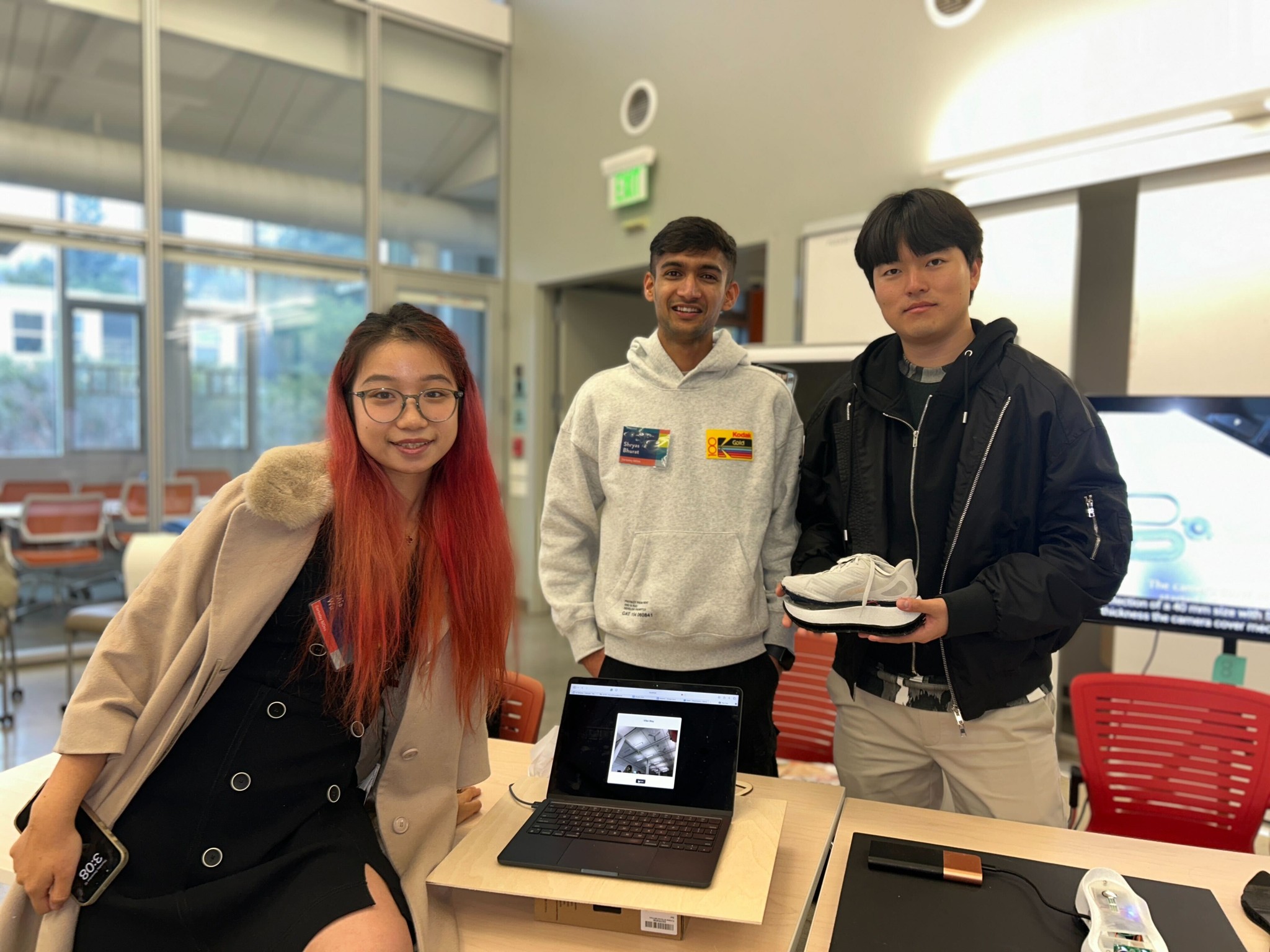
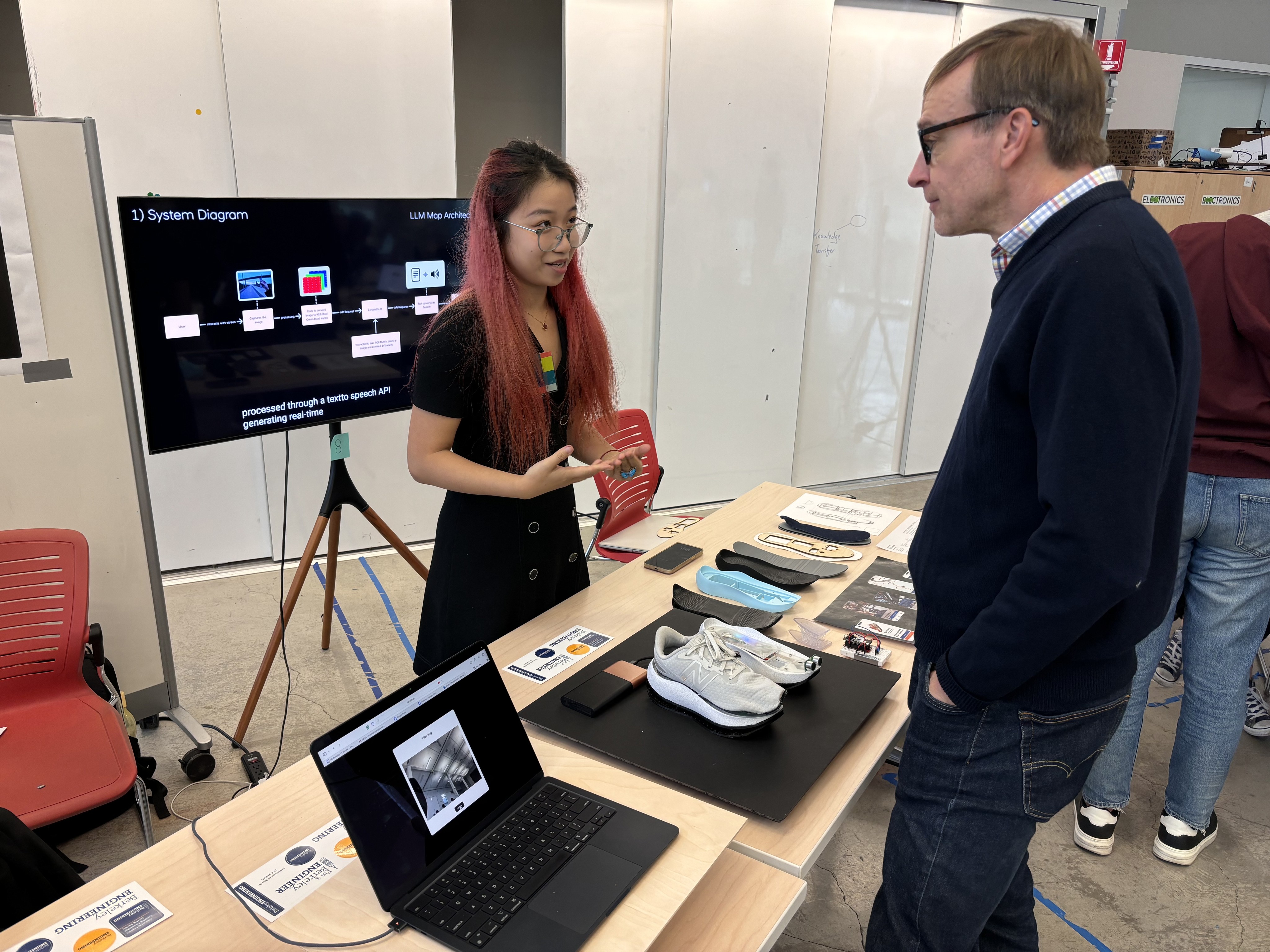
Our team showcased our project at the UC Berkeley Master of Design Showcase 2024. We received multiple positive feedback regarding how we specified the user needs of the visually impaired and how it led to successfully fabricated and functioning products.
Reflection & Future Opportunities
This project was a great opportunity to build an end-to-end product that aims to promote accessibility and inclusivity for the disabled. It required multi-disciplinary skillsets ranging from sketching, 3D modeling, fabrication, physical & interface prototyping, and engineering. I learned the significant impact of cross-functional collaboration could bring to influence human-centered design.
Our team will be further developing this product to pitch in multiple design competitions in 2025.
Copyright©2024. All right reserved Sun-Q Kim